Real Estate Exporting:
A Godsend to the
Industry?
August, 2019
The past few years have been turbulent for the real estate industry to say the least. The economic scene changed drastically throughout that time, and as a result, the purchasing power of Egyptians was deeply impacted due to many factors, most prominently the floatation of the EGP. With prices increasing beyond the reach of most Egyptians, it was necessary for the real estate industry to tap into the bigger global market. Real estate exporting was the most logical next step. This would mean that developers and property owners can market and sell their units to foreign buyers, or Egyptian buyers living abroad, who can pay for the unit with foreign currency. This idea first manifested as the “Beit Al Watan” housing project, which targets Egyptian expats who would pay with foreign currency for a property in Egypt.
Moving swiftly on this evidently promising direction, Minister of Housing Mr. Mostafa Madbouly announced the adoption of a new policy to facilitate the selling of real estate to foreigners and Egyptians living abroad. Following that, Mr. Amr Nassar, Minister of Trade and Industry, activated the Real Estate Export Council. After which the government joined forces with the private sector, and started participating in a number of regional and international exhibitions to promote the concept of investing in Egyptian real estate.
Faith in this new direction spread quickly, due to its many obvious benefits. According to Mr. Khaled Nasser, Chairman and Regional Director of RE/MAX Egypt & UAE, the overall global real estate export market is estimated at two trillion dollars, while Egypt’s share does not exceed 2%; making it a promising market that can have a positive impact on Egypt’s income and the overall economy. “Exporting real estate certainly is a marvelous idea, because it helps all parties in the equation: the country, and the community, and it increases the market movement,” Mr. Nasser states.
If this cooperation between the state and the private sector is an indication of anything, it would be the fact that this could help solve several issues the economy is facing. First of all, the decline in the purchasing power of most Egyptians after the floatation of the EGP, which meant that most real estate units up for sale were left untouched. Second, the economy’s need for an influx of foreign currency. Both of these issues would be addressed by real estate exporting as property prices are quite affordable to foreigners and Egyptians living abroad. This will result in reviving the real estate market and bringing in the much needed foreign currency.
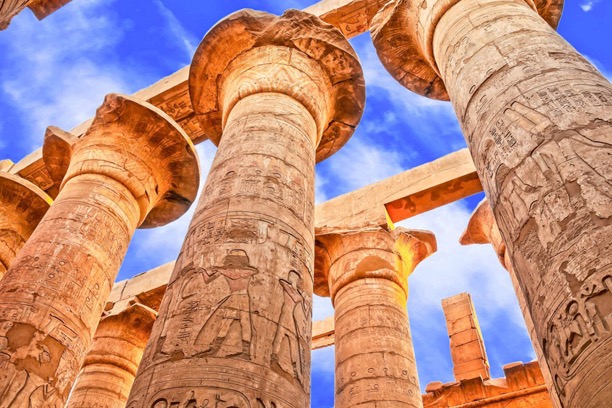
Targeting foreign buyers, though, is entirely different to targeting local buyers. There are many factors at play. Tourism, for example, will have a strong effect on the real estate exporting industry; as tourism rises, it means a rise in prospective buyers in the country.
Another main factor that will heavily influence the success of this new direction, is the quality of the units. Clients living in Europe or the Gulf area are used to a certain level of quality, one that is not easily found in Egypt. If Egyptian developers want to attract these kind of buyers, they must provide properties at a very high standard. This includes employing the latest technologies in order to produce smart environmentally-friendly homes. Developers also need to keep in mind that different nationalities search for different types of units, for various purposes. For example, most Western buyers are interested in summer homes and will therefore purchase units mainly in the Red Sea area. On the other hand, buyers coming from the Gulf usually look for units in central areas in Cairo; their requirements are more luxury-focused, and the more facilities, services, and entertainment available around the unit, the better.
The legal process is another factor that will highly impact the success of this concept. Foreign buyers will be more tempted to purchase units in Egypt when the bureaucracy of the purchasing and registration process is simplified. The availability of mortgage financing service can also make purchasing units more attractive to foreigners. Through this service they can easily purchase a property with a small down payment and pay the rest in installments.
In an effort to further boost this initiative, the government took the step of granting residence to foreigners who buy residential units and pay 40% of their value in foreign currency. Quoting Mr. Nasser “There are a lot of people who are living in counties that are suffering from political or economic issues and are in search of a safer social life, so this law will definitely encourage and attract a big number of people to whom Egypt would be a better and safer place to live in.”

With all these factors going into play at the same time, it will be interesting to see how real estate exporting continues to develop, and whether a balance can be made to ensure the satisfaction of foreign clients and the economy reaping all the rewards.
RE/MAX’s role in this new direction is highly valuable. With a network of more than 125,000 agents operating in over 8,000 offices in more than 110 countries, RE/MAX’s immense global reach and network will play a major role in facilitating the process of marketing Egyptian real estate to foreign clients. “RE/MAX’s presence and outreach in various countries is an extremely important factor, because when one is looking for a partner in a new market, it is important to find someone trusted and efficient,” says Mr. Ahmed El Hitamy, CEO of Madinet Nasr for Housing & Development (MNHD). “Around ten years ago some Gulf countries prohibited importing real estate from Egypt as a result of some incorrect dealings with the clients there. So, the presence of a company with such credibility and a strong global footprint as RE/MAX is tremendously important for real estate exporting,” he continues. Since RE/MAX has offices all over Europe, Asia, North and South America, Australia, Africa, and the Middle East, it will be able to contribute in this initiative by utilizing its reach to showcase Egypt’s real estate potential to its clients everywhere around the world.
Seeing how enthused and con dent so many real estate experts are, one cannot help but be hopeful for the future of real estate exporting in Egypt, and the overall impact it will have on the economy and the industry as a whole.